Cross-Platform Loyalty Systems Reveal Player Patterns in Slots and Table Games
Written by Elena Simmons · Jun 14, 2026

Cross-Platform Loyalty Systems Reveal Player Patterns in Slots and Table Games
Modern casinos rely on integrated loyalty platforms that collect and analyze activity from both slot machines and table games through a single player account, and these systems record details such as wager volume, game selection, session duration, and reward redemption patterns in real time. Operators connect electronic slot meters with table game interfaces so that every spin and every hand contributes to one profile, which allows the platform to calculate tier status and issue targeted offers without requiring separate logins for different gaming areas.
Electronic Data Capture at Slot Machines
Slot floors feed information directly into loyalty databases through networked meters that track coin-in totals, bonus trigger frequency, and average bet size per session, while players insert cards or use mobile apps that sync the same metrics across multiple properties. Research from the University of Nevada shows that slot tracking modules capture up to 40 data points per minute during active play, and these metrics feed into algorithms that adjust future promotions based on historical behavior rather than isolated visits.
Table Game Integration Through RFID and Dealer Input
Table games transmit data via RFID-embedded chips and dealer terminals that log average bet amounts, hands per hour, and game type preferences, and loyalty systems combine this stream with slot records so that a player who moves from blackjack to video slots receives credit for both activities under the same account. Observers note that many properties in the United States and Canada have installed table-side readers that read player cards automatically, reducing manual entry errors and creating continuous data flows that update central servers within seconds of each transaction.
Centralized Databases and Cross-Platform Matching
Operators maintain unified databases that match slot and table activity through unique player identifiers, and these repositories apply matching rules that link online and land-based sessions when the same loyalty number appears in both environments. Data from the Nevada Gaming Control Board indicates that approved systems must demonstrate audit trails capable of reconciling activity across game categories, which helps regulators verify that points and comps reflect actual play rather than segmented estimates.
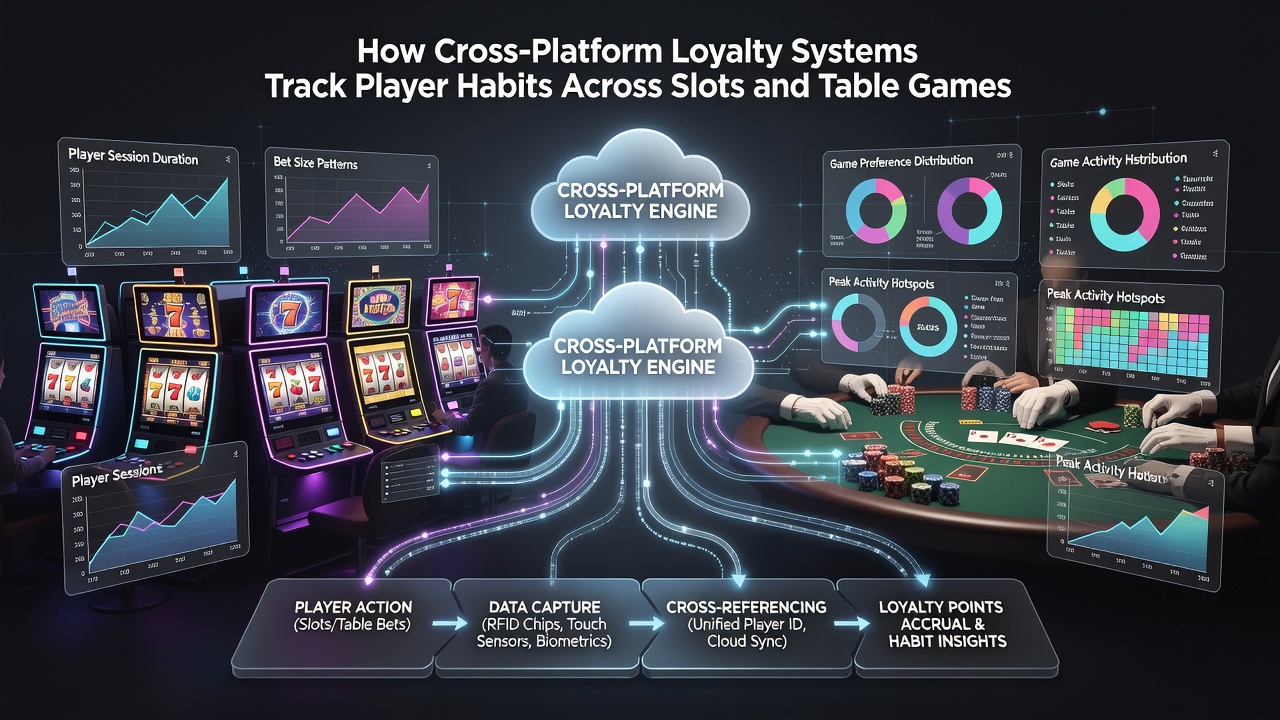
Integration layers also pull location data from mobile apps and kiosk check-ins, allowing the system to recognize when a player shifts between gaming zones and adjust reward calculations accordingly, and this level of granularity supports segmented marketing campaigns that reference both high-volume slot sessions and steady table game participation.
Behavioral Metrics and Habit Analysis
Loyalty platforms measure metrics including theoretical loss, actual loss, game volatility tolerance, and time-on-device across categories, while machine learning models compare these figures against peer groups to identify patterns such as preference shifts from low-denomination slots to higher-limit table games. Reports prepared for the Australian Communications and Media Authority describe how operators use these comparisons to forecast visit frequency and design retention offers that reference a player's established mix of slots and tables rather than generic incentives.
June 2026 updates to several North American casino management systems introduced enhanced API connections between slot and table tracking modules, and these changes allow real-time synchronization even when players switch properties within the same operator group. The result is a single view of play that captures both electronic and live game habits without requiring manual reconciliation at shift changes.
Regulatory Oversight and Data Standards
Gaming control agencies require that loyalty systems maintain secure logs of all tracked activity and that players receive clear notice of data collection practices, and compliance documentation often includes sample reports that show how slot and table metrics combine into overall player value scores. Industry groups such as the European Gaming and Betting Association have published guidelines that encourage standardized data fields so operators can share aggregated insights across jurisdictions while protecting individual identities.
Systems also flag unusual patterns, such as sudden changes in game preference or bet size, which can trigger responsible gaming interventions when thresholds are crossed, and these alerts draw from the same unified dataset used for marketing and comp decisions.
Conclusion
Cross-platform loyalty systems create a continuous record of player activity by linking slot meters with table game interfaces through centralized profiles that update in real time, and the resulting datasets support accurate reward allocation while meeting regulatory standards for transparency and auditability. Properties that implement these unified trackers gain visibility into how individuals distribute their play across game types, which informs both operational decisions and compliance reporting without relying on separate tracking methods for each category.